Prediction Markets Concerns: From Online Sports Gambling to Geopolitical Events

By NCADD-RA Director Jennifer Faringer, MS.ED, CPP-G
Relatively new on the gambling scene are various “predictability markets” which allow users to essentially gamble on future events such as election results and sports outcomes by turning them into “tradeable contracts.” Currently two of the most popular predictability markets are Kalshi and Polymarket, with Kalshi at 60 percent of the market. The price of tradable contracts is determined by the crowd implied probability, or in other words, their collective opinion.
In traditional gambling, the gambler is betting against the house, and the house rarely loses. Income or revenue is generated by the players’ losses. In contrast, there is no brick-and-mortar house (such as a casino or sports bookmaker) with the predictability market. Rather, income or revenue is generated whether or not the player wins or loses. For example, if a tradeable event is posted at $0.75, that indicates the market thinks there’s a 75 percent chance that the predicted outcome of an event occurs. If you buy at $0.75, the event happens, and you receive $1, you’ve earned $0.25 profit. If the predicted event doesn’t happen, you lose the principal.
While both Kalshi and Polymarket have experienced a range of legal barriers in the last several years, a recent report comparing and reviewing both described Kalshi as “better for users who prefer a federally regulated platform” because it allows for direct USD deposits. Polymarket is described as ideal for those who prefer to trade and bet in cryptocurrency.
Some states’ regulations have issued cease and desist orders claiming Kalshi’s sports’ contracts violate gambling laws. Polymarket was fined in 2022 for running an unregistered exchange. To comply, they created a regulated pathway to operate in the U.S. Initially, Polymarket was seen as a leader in this world of predictability markets. Since 2025, Kalshi has overtaken it in sheer volume.
The world of online prediction markets and the increasing incidence of insider trading was brought to light during a recent segment which aired on the television show 60 Minutes. Gamblers entering the prediction market are betting on the outcome of events far beyond the scope of sports betting including making wagers on real-world events on such things as the outcome of elections, or military operations or diplomatic missions, accessing and using classified information to make their predictions. This suspicious betting activity happens to coincide with the outcome of significant geopolitical events.
The sharp rise in prediction markets goes hand-in-hand with the concurrent rise in cryptocurrency. Unlike corporate insider trading where the individual benefits financially by using confidential corporate information, the inside trader who accesses classified information to predict the outcome of sensitive military or related events jeopardizes the security and safety of those on the ground who are directly involved in the operation. Individuals participating in prediction markets in this way may be risking the lives of others going far beyond their individual financial gain.
The legalization of online sports opened the flood gates, increasing access to millions giving them the vehicle to bet on multiple individual plays within a sports event 24/7. As gamblers with access to insider/classified information now enter the prediction markets, the question becomes are laws and regulations that are currently in place able to provide a sufficient barrier and deterrent to avoid jeopardizing national and/or international security? Only time will tell…
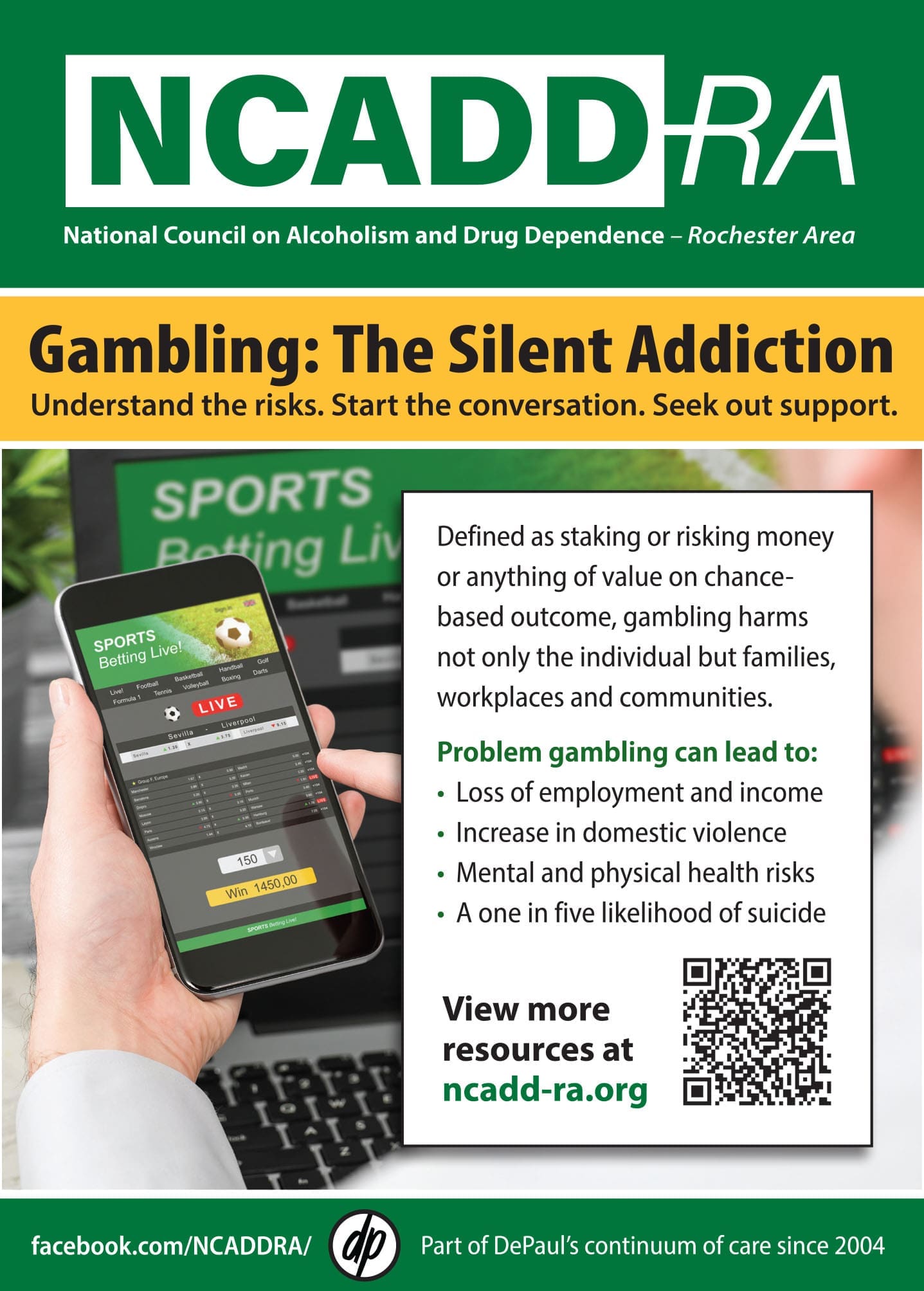
For more information on Problem Gambling resources and local Gamblers Anonymous meetings, visit www.ncadd-ra.org/services/finger-lakes-addiction-resource-center/. For more information on this and other addiction-related topics, contact the National Council on Alcoholism and Drug Dependence – Rochester Area or visit our website at www.ncadd-ra.org.